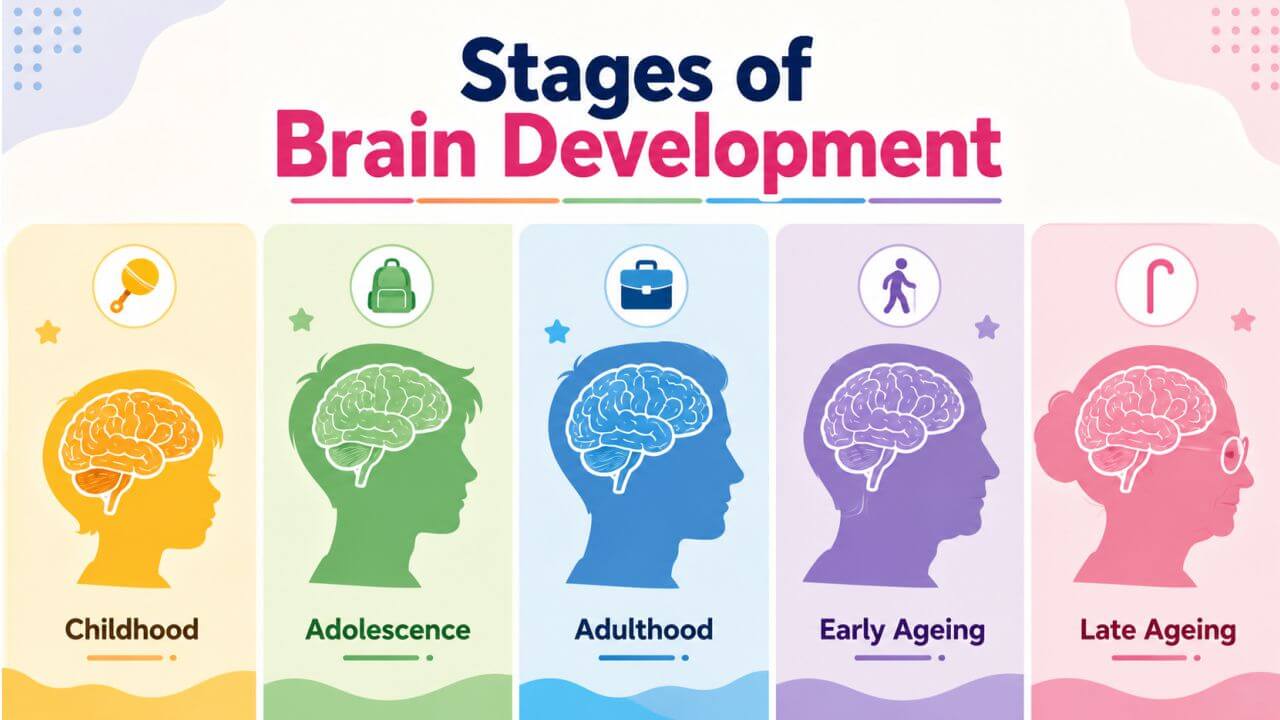
Infancy and childhood are full of playful giggles, babbling, laughter and wonder. One may not know, but all these things are related to brain development in early childhood. How? While brain development continues throughout life, its most significant growth and development occur during childhood. In fact, up to 90 per cent of the brain is developed during this phase. This is why early education is vital for the growth of a child. In this write-up, we will explore the meaning, importance and key components of education for growth and brain development.
What is the Importance of Education for Brain Development in Early Childhood?
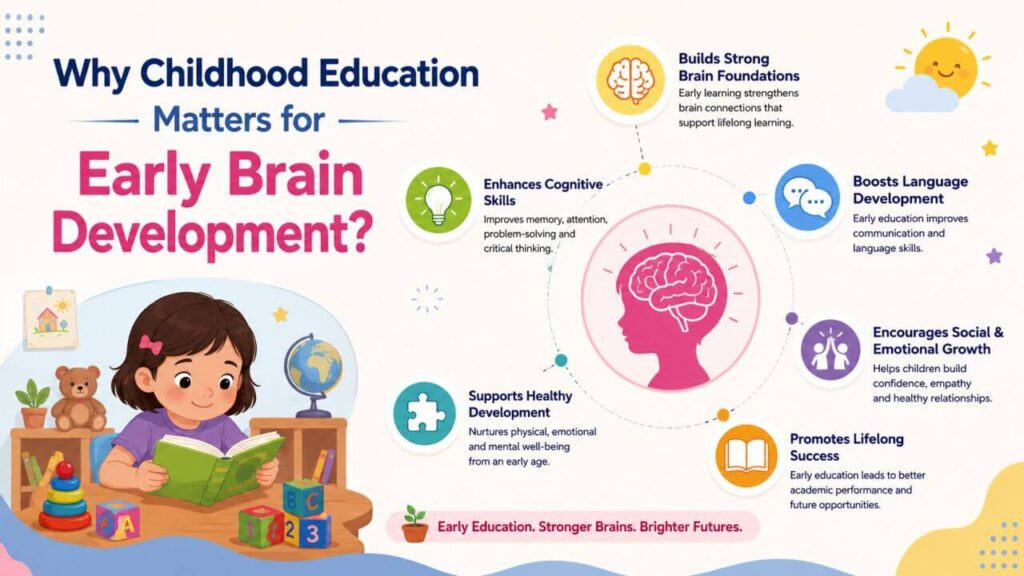
Education is essential for brain development in early childhood because, in the early years of life, various areas of the brain begin to develop simultaneously. This includes vision, hearing, communication, memory, motor functions and even emotions. So, growth occurs rapidly not only to support brain development but also to support physical functions related to the heart, lungs, immunity, digestion, and more.
Since most of the brain development takes place in an early phase, providing high-quality education plays a crucial role in early childhood. Let’s learn how.
- The early years of education help with cognitive growth to improve focus, memory, analytical and problem-solving skills.
- Education helps children learn verbal and nonverbal communication skills to interact with adults and fellow kids.
- Education also lets children grow emotionally and develop empathy, expressions and self-awareness.
- Early education includes rhymes, poems, songs and dances which help in improving communication, motor and language skills of a child.
- Storytime, creative education, art, music and crafts enhance innovation and creativity among the kids.
What is Early Childhood Education?
Now that we have understood how important early education is for the overall growth of a child, let’s look at the meaning of early childhood education. Early education refers to a structured learning programme which aims to develop cognitive, social, and emotional skills among children from birth to 8 years of age. Early childhood education includes foundational care, preschool or kindergarten and early primary education.
Childhood is a formative stage during which children absorb and learn from everything around them. This includes sounds, colours, phrases, language, behaviour, and even patterns. With a structured education programme, children can learn and play in a balanced way. Such programmes are not only restricted to academic learning but also promote critical thinking, problem solving, motor skills and cognitive intelligence so they can navigate the world easily. Let’s take a look at the key components of early childhood education.
What are the Key Components of Early Childhood Education?
We understood the meaning and purpose of childhood education for brain development in early childhood. Let us discuss the major components of it. Early childhood education is a structured programme to foster the holistic development of children, including physical, emotional and social development along with formative skills, language prowess and creative expressions. Some key components are mentioned below.
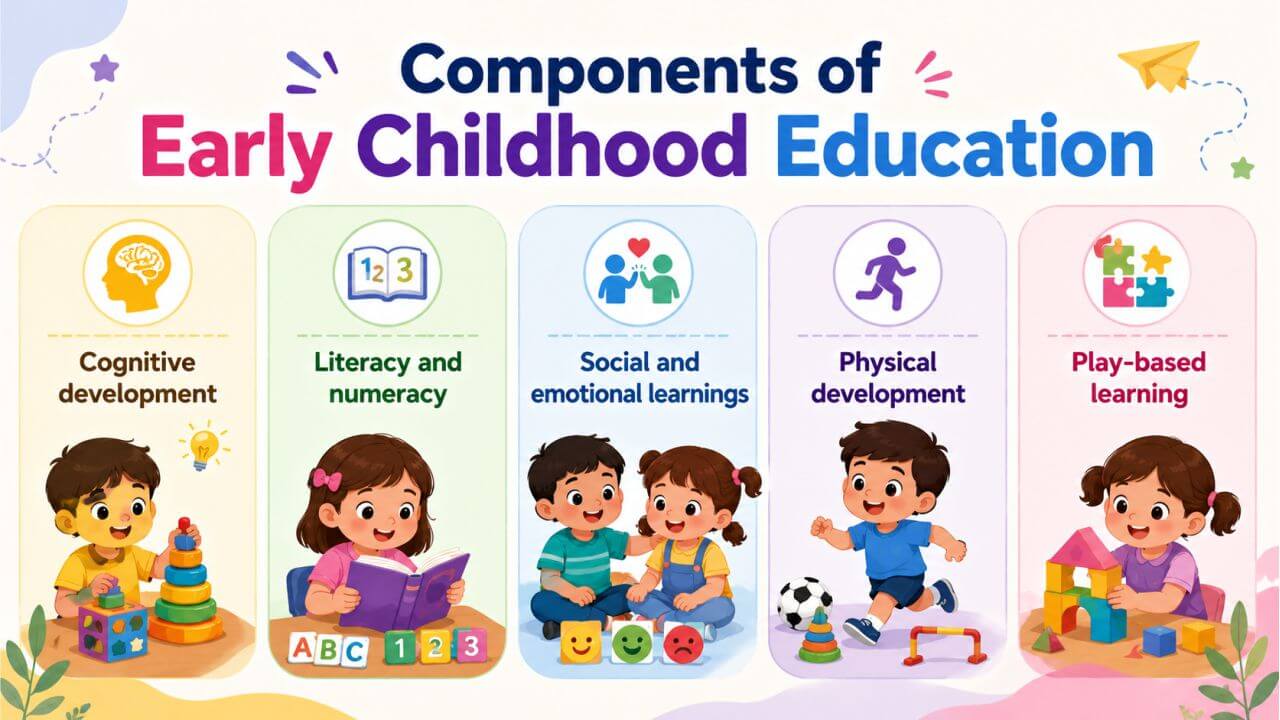
- Cognitive development encourages curiosity, critical thinking, problem solving and analytical skills of a child. Storytelling, music, poems, art and craft activities help in developing such a mindset.
- Literacy and numeracy are essential components of early childhood education, often fostered through counting games, puzzles, and other play-based learning activities.
- Social and emotional learning is a cornerstone of early childhood education. This helps in developing empathy, kindness, and meaningful bonds and friendships.
- Physical development activities are an integral part of early education. Both outdoor and indoor activities help with spatial and body awareness, motor skills and more.
- Simulation-based learning through play-based games enhances problem-solving, cognitive flexibility, confidence building, flexibility and more.
How Can CBSE Schools Contribute Towards Brain Development in Early Childhood?
CBSE schools play a vital role in supporting brain development during early childhood by providing a balanced learning environment that nurtures cognitive, emotional, social, and physical growth. Through activity-based learning, interactive classrooms, and age-appropriate teaching methods, children develop essential life skills while strengthening the neural connections responsible for learning, memory, communication, and creativity. The focus is not only on academic achievement but also on fostering curiosity, confidence, and a lifelong love for learning.
CBSE schools contribute to early brain development in the following ways:
Activity-based Learning
Hands-on activities, experiments, storytelling, and classroom discussions encourage curiosity, critical thinking, and problem-solving skills.
Strong Foundational Skills
Literacy and numeracy are developed through interactive games, puzzles, rhymes, and engaging classroom activities that improve memory and logical reasoning.
Holistic Development
Equal importance is given to academics, sports, music, dance, art, and crafts, helping children develop creativity, motor skills, and emotional intelligence.
Social and Emotional Learning
Group projects, collaborative learning, and value-based education promote empathy, communication, teamwork, and self-confidence.
Safe and Stimulating Environment
A nurturing classroom with supportive teachers encourages children to ask questions, express ideas freely, and develop a positive attitude towards learning.
Focus on Experiential Learning
Real-world experiences and play-based activities make concepts easier to understand, helping children retain knowledge more effectively.
By integrating academics with creativity, physical activities, and emotional well-being, CBSE schools lay a strong foundation for healthy brain development, enabling children to grow into confident, independent, and well-rounded individuals.
What are the Top CBSE Schools in Lucknow?
K.R. Mangalam World School believes in brain development in early childhood and thus provides a progressive and enriching environment to the students. Counted amongst the best schools in Lucknow, KRMWS is committed to high-quality, holistic education so that students develop a well-rounded personality. For admission in K.R Mangalam School, Lucknow, follow the steps below.
- Apply for the online registration.
- Our admission counsellor will contact you within 24 hours to schedule an interaction round.
- If you’re selected, submit documents and admission fees.
Frequently Asked Questions
At what age does a child’s brain fully develop?
A child’s brain is said to be fully developed when they reach their mid to late 20s. This can be from 25 to 30 years of age. In the last maturation age, decision making, risk assessment, impulse control, etc are developed.
What are the 7 stages of brain development?
The 7 stages of brain development include Neurogenesis, Cell Migration, Cell Differentiation, Cell Maturation, Synaptogenesis, Cell Death & Synaptic Pruning and Myelogenesis.
What is the importance of brain development in early childhood?
Brain development is very important for early childhood because about 90 per cent of our brain is developed before kindergarten age. The brain development is very rapid during the early age, which determines future learning, physical and mental health and even behaviour.
What is the role of early education for brain development?
The role of early education is highly important for brain development as it catapults the growth of neural pathways in the first 5 years of life. In this time, more than 1 million neural connections are made in each second. So early education is a foundation for emotional, social, and cognitive growth and functions.
What happens if a child misses out on early education?
There is a possibility that if a child misses out on early education, they will have to face problems when they join a structured classroom and routine. Because of a lack of exposure to social situations, they may not know how to handle conflicts. But such gaps can be resolved after the commencement of formal schooling.
Which is the best CBSE school in Lucknow?
K.R. Mangalam World School is one of the best schools in the Lucknow region. Featuring a designed 2.25-acre modern campus, it was established in 2025 and is a part of a long legacy of schools through Delhi, NCR and other regions.