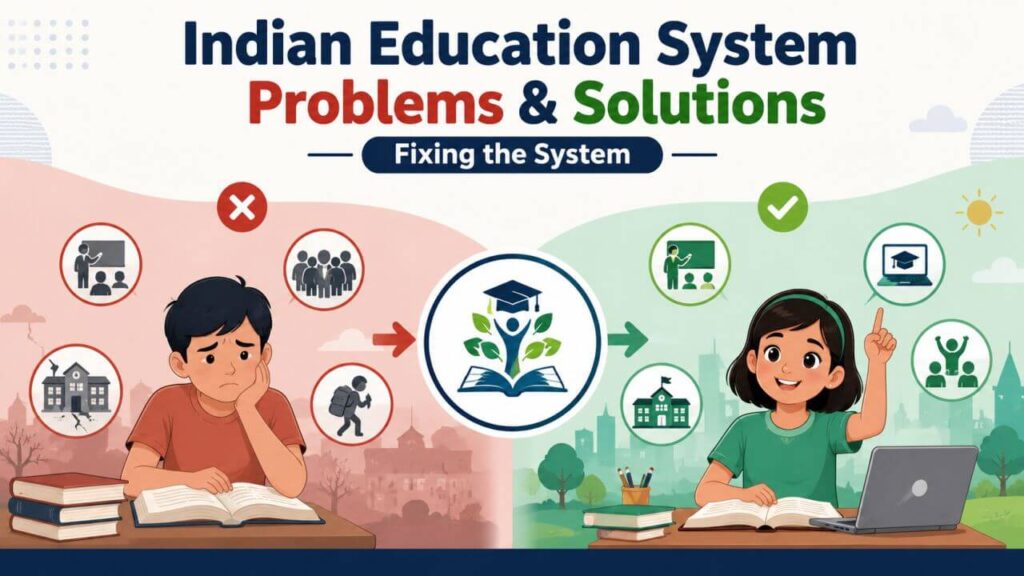
The Indian education system is one of the largest and most multifaceted in the world. The country has more than 370 million youth, and our education system plays a huge role in moulding their personality, career and life. Education has far-reaching effects, and all countries need to have a systematic, structured, standardised curriculum so they can provide high-quality education. Unfortunately, our system is marred with critical challenges and problems. In today’s article, we will specifically discuss the Indian education system problems and their possible solutions. Let’s start right away!
Brief about the Indian Education System
Before delving into the Indian education system problems, let’s get an overview of it. The Indian education system caters to millions of students encompassing thousands of schools, colleges and universities. There are various school boards in the country, but the top ones include the Central Board of Secondary Education (CBSE), Indian Certificate of Secondary Education (ICSE), State Board, International Baccalaureate (IB) and more. Recently, there have been several changes in our system, and a few of these are mentioned below.
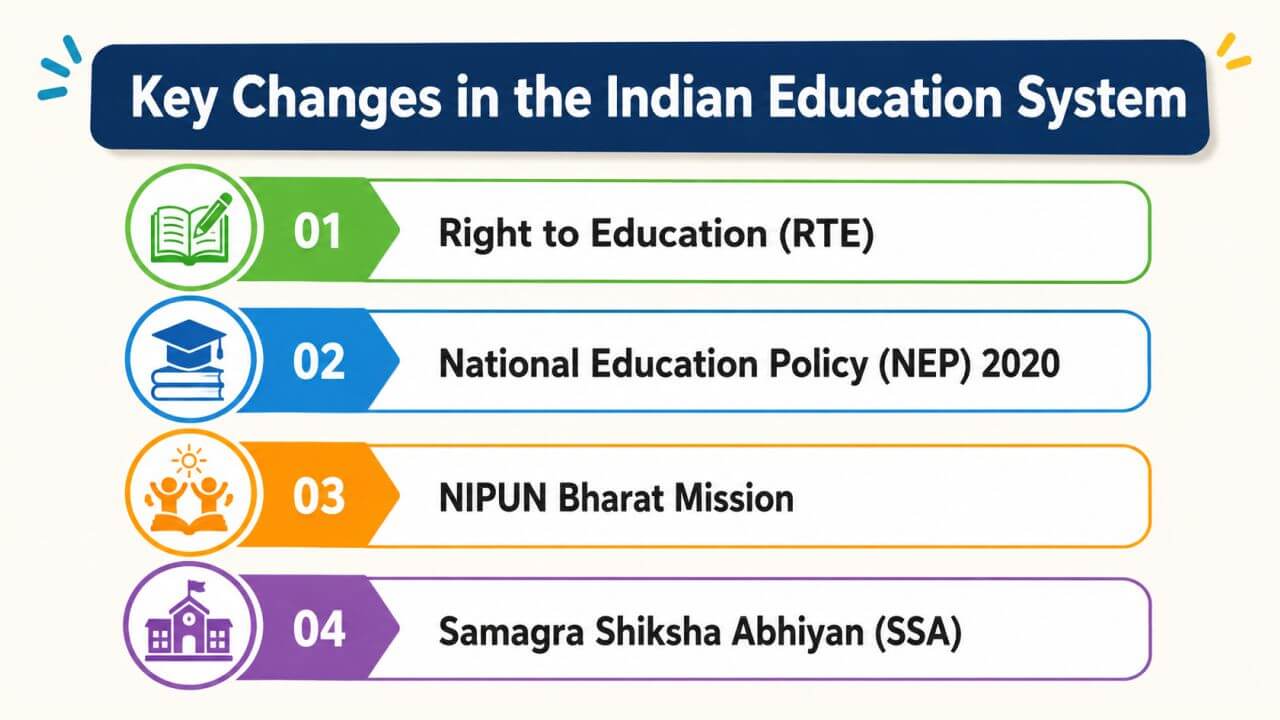
Let’s take a look at the Indian education system problems and solutions in the sections below.
What are the Major Problems in the Indian Education System?
The Indian education system is vast and multifaceted, reflecting the rich diversity of students, cultures, and backgrounds across the country. Our education system and society have evolved into an academic-centric model, where scholastic excellence has become the top priority. This has led to the relentless pursuit of academic achievements, mounting immense pressure on students. This led to various problems, including depression, anxiety attacks and even an increase in suicide rates. Let’s understand some major Indian education system problems.
Budgetary Issues
Our country has a serious problem of a lack of funding, which is leading to various other critical problems, such as a lack of proper infrastructure and skilled teachers. Education is still not considered a top priority, leading to budgetary issues. In 2020, the National Education Policy recommended 6% of GDP on education, which otherwise is around 3-3.5%. Each year, education is becoming expensive, and most people from a lower background are unable to access high-quality education.
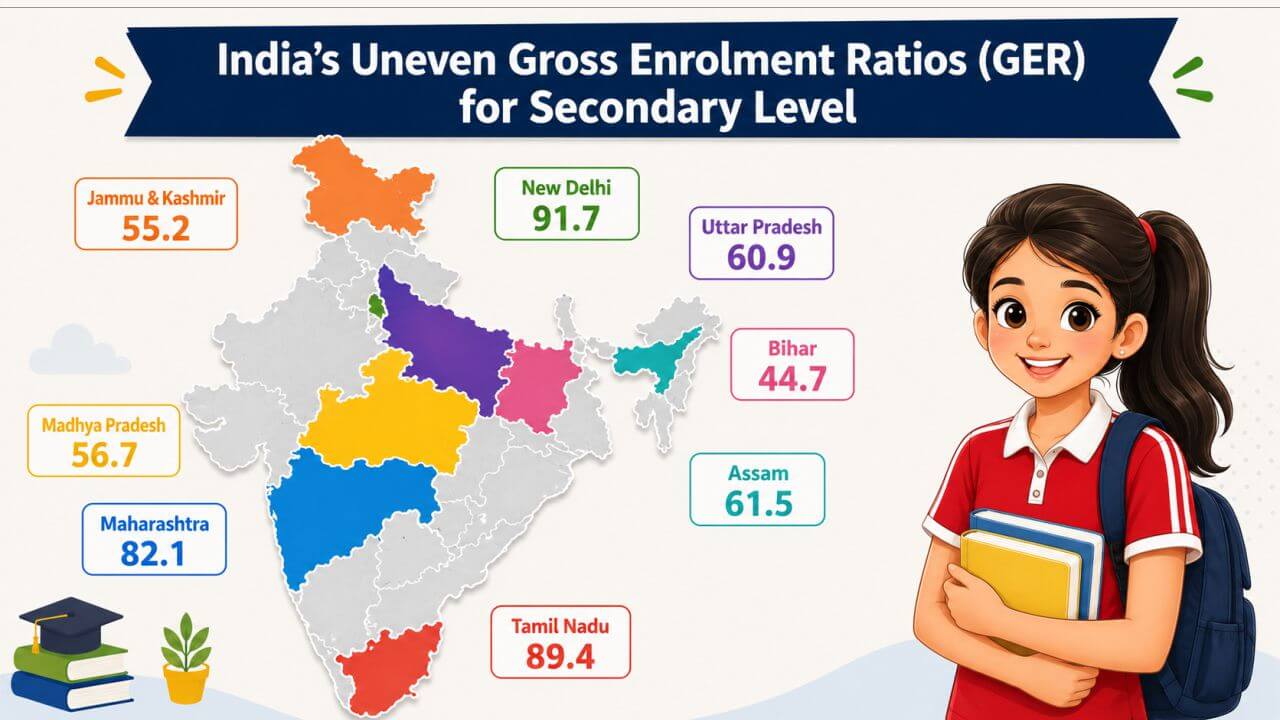
Uneven Gross Enrolment Ratios (GER)
Exam-Centric Learning
There is a huge problem regarding the exam-centric learning model of the Indian education system. A lot of emphasis is laid on the examinations and tests instead of understanding the concepts. This encourages rote-learning and memorisation over innovation, creativity and conceptual clarity.
Excessive Competition & Pressure
Students today face an immense amount of pressure due to an increase in competition. Even from an early age, children are encouraged to focus on obtaining high grades that will lead to a comfortable life in future. Since the whole focus is on the number game, joining top coaching centres and cracking competitive exams have become a staple in a child’s life. This has led to a significant increase in suicide rates.
Digital Divide
India, as a country, has a massive digital divide where very few students have access to mobiles, laptops, computers, and the internet. After COVID-19, many schools switched to an online or hybrid teaching model. However, not all students were able to do so since not many are digitally literate or have the required means. This leads to less enrollment in computer science and tech-related higher education.
What are the Solutions to the Indian Education System Problems?
Now that we have understood the problems of our education system, let’s take a look at the possible solutions.
- One of the biggest problems is the lack of funding, and to resolve that, our government can increase expenditure on education, just like the NEP has recommended.
- Students should be able to transition from school to colleges/universities more easily. The government should offer career counselling programmes to guide the youth in the right direction.
- The government can reform the assessment process to emphasise learning over marks. The curriculum structure should also promote conceptual understanding over rote memorisation.
- The standardisation of exams has increased pressure and competition among students. The government can broaden educational opportunities by introducing a wider range of competitive examinations.
- Technology-integrated education should be made accessible to all students, just as education itself is compulsory for every child. Students should have access to the internet, mobile devices, and laptops to help them become digitally literate.
K.R. Mangalam World School: Best School in Lucknow
K.R. Mangalam World School is among the top schools in Lucknow. Established in 2025, KRMWS has a long-standing legacy since the 1960s, with the foundation of KRMWS in Greater Kailash. The admission for the academic year 2026-27 is open for all.
You can register for admission online. Follow the steps below.
- Initiate the application process.
- The admission counsellor will contact you within 24 hours to schedule an interaction round.
- Submit the document and the admission fee upon selection.
Conclusion
To sum up, the Indian education system has made significant progress, yet several challenges still need attention. Indian Education System Problems, such as exam pressure, unequal access to quality education, and the digital divide, must be addressed through effective reforms and increased investment. By promoting conceptual learning, technological accessibility, and holistic development, India can build a stronger, more inclusive education system that empowers future generations and prepares students for global opportunities.
Frequently Asked Questions
What is the current structure of the education system of India?
The education system in India is considered one of the largest and most multifaceted in the world. Our education system has undergone a curricular reframing as the structure has changed from a 10+2 to a 5+3+3+4 structure.
What are the 4 pillars of education?
According to a UNESCO commission under the leadership of Jacques Delors, the 4 pillars of education are learning to study, inquire and co-construct together, learning to collectively mobilise, learning to live in a common world and learning to attend and care.
What is the main problem with the Indian education system?
The main issue with the Indian education system is the lack of modern teaching methodology and an exam-centric nature.
What is the biggest challenge for students in India?
The biggest challenge that most students in our country face is the gap between the pressure mounted by competitive exams and the lack of employment among the youth.
Which is the top-most CBSE school in Lucknow?
There are many top CBSE schools in Lucknow, but the top-most one is K.R. Mangalam World School, Lucknow. The recently established school has a meticulously designed 2.25-acre modern campus with fully-equipped infrastructure.
Mehak Reejonia
Content WriterMehak is a creative writer with over five years of experience crafting content across diverse industries. A Political Science graduate with a keen analytical mind, she brings precision, research rigor, and an eye for detail to everything she writes. At K.R. Mangalam Schools and University, she is currently handling blogs, on-page and off-page content, brand communications, SEO metadata, etc. When she's not busy typing her worries away, you'll find her deeply immersed in her screen, chasing the right word.